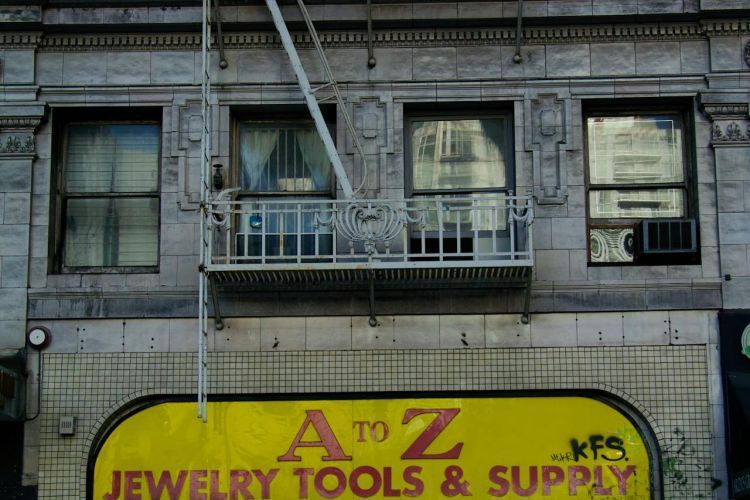
Legal Non-Conforming Property Capital in California | HanoverMC
By HanoverMC On March 6 2024
Legal non-conforming status, a CUP issue, or a burn-down letter? Hanover Mortgage Company arranges private, business-purpose capital — case by case.
Legal non-conforming properties, Conditional Use Permit (CUP) questions, and county or city burn-down letters add complexity that standardized capital programs aren't always built to evaluate individually. Hanover Mortgage Company arranges private, business-purpose capital on difficult and unusual California properties like these, evaluating each deal on the asset and available equity rather than requiring a fully conforming file.
Not every property in California conforms neatly to current zoning, permitting, or rebuild standards — and that's worth understanding well before a refinance or purchase is underway. Legal non-conforming status, a CUP that needs clarification, or a county- or city-issued burn-down letter can each add real complexity to a loan file, even when the property has strong equity and a clear income story.
These situations come up often in California. Older commercial corridors, agricultural parcels, mixed-use buildings, and properties in fire-affected counties frequently carry one or more of these characteristics. Understanding what each one means is the first step toward finding capital that fits.
Call 714.838.1474 x102 or visit www.hanovermc.com
A legal non-conforming property is one that was built lawfully under a prior zoning code but no longer matches the zoning currently in effect — the use, density, setbacks, or structure predates a rezoning and continues only because it was "grandfathered" in. The property is fully legal, but its non-conforming status is an important detail for any lender to understand.
The consideration lenders think through is straightforward: if the structure is ever substantially damaged, altered, or torn down, the owner may face limits on rebuilding it exactly as it exists today. That question around future rebuild rights is the kind of nuance that benefits from individual review rather than a standardized approval model.
A CUP allows a specific use on a property that wouldn't otherwise be permitted under the base zoning — for example, a daycare in a residential zone, an ag-related business on rural land, or a commercial use layered into a mixed-use parcel. CUPs are typically tied to conditions: hours of operation, occupancy limits, parking requirements, or periodic renewal.
Questions can arise when a CUP has lapsed, wasn't formally recorded, is under review by the county or city, or doesn't clearly transfer with a sale. CUPs can also carry their own carve-outs and conditions specific to that permit and that jurisdiction, so no two CUP situations look quite the same — each one needs to be evaluated on its own merits rather than measured against a generic standard. Confirming that the income-producing use of a property is durable for the life of a loan takes some digging into the permitting history — exactly the kind of individualized review that a case-by-case underwriting approach is well suited to handle.
In fire-affected areas of California, counties and cities issue what's commonly called a burn-down letter, confirming how much of a structure was damaged or destroyed and what that means for rebuilding rights. This ties back to a longstanding rule in California zoning: many jurisdictions allow a legal non-conforming structure to be rebuilt as it was, by right, if damage falls at or under a set threshold — commonly 50% of the structure's value — but require the rebuild to meet current zoning and code once damage exceeds that threshold, up to a full loss.
| 50% (or Under) Damage | 100% Burn-Down (Total Loss) | |
|---|---|---|
| What it typically means | Damage assessed at or under the jurisdiction's threshold (often 50%) | Structure deemed a total loss, beyond the threshold |
| What's generally allowed | Rebuild as it existed, non-conforming status preserved, by right | The traditional default rule may require the rebuild to meet current zoning and code — unless a streamlined, like-for-like disaster-rebuild ordinance is in effect for that jurisdiction |
| Capital consideration | Generally more straightforward to evaluate | Calls for a closer look, including whether a like-for-like disaster ordinance applies |
A 100% burn-down (total loss) determination in particular calls for individualized underwriting rather than a standardized checklist, since it directly affects the property's future value, insurability, and rebuild rights.
Call 714.838.1474 x102 or visit www.hanovermc.com
Many loan programs are built around standardized, replicable criteria: verifiable income ratios, conforming zoning, and collateral that can be rebuilt or resold without legal ambiguity. Legal non-conforming status, a CUP question, or a burn-down letter each introduce the kind of case-by-case legal and title nuance that benefits from a lender willing to evaluate the specifics of a single property rather than apply a uniform guideline.
That's the kind of file a private money mortgage company is well positioned to work through.
Hanover Mortgage Company arranges private, business-purpose mortgage financing for property owners and investors throughout California, evaluated on the asset and available equity rather than income or DTI. HanoverMC does not fund loans directly — capital comes from private trust deed investors, with financing arranged under HanoverMC's California DRE broker license.
Because capital is arranged around the real estate rather than a rigid income-ratio model, a legal non-conforming use, a CUP question, or a burn-down letter becomes part of the equity and risk picture HanoverMC underwrites and documents through custom, California-specific loan documentation. HanoverMC is a private money mortgage company and doesn't work from rate cards, so every loan is structured and documented individually. Business purpose 1st, 2nd, and 3rd[s] can be arranged for these situations, and HanoverMC will also arrange business-purpose capital on an owner-occupied property, provided the loan itself is for a business purpose.
HanoverMC generally arranges capital up to 70% LTV on 1–4 unit properties and up to 65% LTV on commercial deals, with CLTV generally capped around 60%. Land and other unusual or difficult collateral types are evaluated case by case.
California's mix of older housing stock, decades of shifting zoning codes, agricultural-to-residential conversions, and a growing number of fire-affected counties means these three considerations — legal non-conforming status, CUP questions, and burn-down restrictions — surface more often here than in many other states. An owner can go years without ever needing to think about the issue, until a refinance, a sale, or a rebuild after damage brings the question of what's permitted on the parcel into focus.
Title companies and appraisers will often flag these details during a transaction. Getting ahead of the issue — understanding a property's permitting and rebuild history before beginning the loan process — can help keep a transaction moving smoothly.
A few steps tend to make any loan conversation move faster:
None of this guarantees a particular outcome, but it does mean the conversation starts from documentation rather than uncertainty.
HanoverMC has arranged business-purpose capital across a wide range of asset types and situations — a look at a few gives a sense of the range:
A business purpose 1st purchase loan on a mixed-use, multi-parcel property.
A cash-out refinance on a historic, non-profit-owned property.
Business purpose 1sts arranged on manufactured home rental portfolios.
A purchase loan on a religious facility.
A buy-and-hold loan on a mixed-use property in Berkeley.
A non-recourse loan arranged for a nonprofit-owned property.
A $680K blanket loan cross-collateralized by a commercial building and two SFRs, at 56% LTV.
Click here to see more past closed transactions.
Can a property with a 100% burn-down (total loss) determination still get a loan?
It's possible. It's evaluated case by case based on whether the rebuild can proceed like-for-like or must meet current zoning, the remaining equity in the property, and the overall asset picture. Debris removal and soil clearance are also typically required before a rebuild permit can be issued, and that status factors into the evaluation as well.
Does an unresolved CUP mean a property can't be refinanced?
Not necessarily with private, business-purpose capital. The permit status becomes part of the underwriting picture rather than an automatic decline.
Will legal non-conforming status affect the loan-to-value offered?
It's factored into the case-by-case evaluation of the asset and available equity, since non-conforming status can affect long-term rebuild and resale considerations.
Is it possible to get capital on a non-conforming duplex or small multifamily property in California?
Yes — non-conforming residential and mixed-use properties are among the asset types evaluated on a case-by-case basis, based on the equity and specifics of the property.
Does a CUP transfer to a new owner when a property is sold, or does it have to be reapplied for?
It depends on the jurisdiction and the specific permit — some CUPs run with the land and transfer automatically, while others are tied to the original owner or use and may require a new application. This is one of the more commonly misunderstood parts of a CUP, and it's worth confirming directly with the local planning department before assuming either way.
If a property required a CUP to operate its current use, does that automatically make it "legal non-conforming"?
Not necessarily — a validly issued and active CUP is generally considered a legal, permitted use, while "legal non-conforming" typically describes a use that predates current zoning and continues under grandfathered rights. The two get confused often, but they're evaluated differently, which is another reason these files benefit from individual review.
Can a private, business-purpose loan on a property like this later be refinanced into more conventional terms?
That's a conversation to have directly about the specific property and its timeline, since it depends on how and whether the non-conforming, CUP, or burn-down issue gets resolved.
Call 714.838.1474 x102 or visit www.hanovermc.com
DISCLAIMER
Hanover Mortgage Company is California licensed only. Real Estate Broker – California Department of Real Estate. Broker License #01410448 │ NMLS I.D. Number: 337458. INTEREST RATES CAN CHANGE WITHOUT NOTICE. ASK US FOR CURRENT RATE INFORMATION. BORROWERS AND PROPERTIES MUST QUALIFY. CONDITIONS AND RESTRICTIONS MAY APPLY. Loan programs, amounts, rates and terms are subject to change without notice. Loan approval is not guaranteed and all loan applications are subject to verification of acceptable credit, income, employment, lien position and value of collateral in the sole discretion of Hanover Mortgage Company. Flood and/or property hazard insurance may be required. Additional fees, conditions, restrictions and limitations may apply. Not all programs are available in all areas. The interest rate for adjustable rate mortgage loans is subject to increase. Please contact Hanover Mortgage Company to determine your eligibility for a specific loan product. Hanover Mortgage Company does not offer financing for those transactions defined as ‘Covered Loans’ or ‘High Cost Loans’ in any state or federal law. Hanover Mortgage Company is a Mortgage Broker. Mortgage Broker fees will apply unless stated otherwise. Disclosure: Money invested through a mortgage broker is not guaranteed to earn any interest or return and is not insured. State law dictates that we acknowledge that interest on trust deeds is not guaranteed. No investment is completely risk free and past performance is not a guarantee of future results. Before investing, investors must be provided applicable disclosure documents. Investment Products: Are Not FDIC Insured • Are Not Bank Guaranteed • May Lose Value • Are Not a Deposit • Are Not Insured by Any Federal Government Agency. Investments arranged through Hanover Mortgage Company are not insured or guaranteed. All investments carry inherent risks, including the potential loss of principal. Past performance is not indicative of future results.